Building a company brain that drives itself
We're not selling you anything. We're building something for our own company — a way to run most of the business without doing every task ourselves — and we're documenting the journey as we go. Soon we'll open it up. Here's the idea, and where it came from.
Memory was the easy part
A few years ago, the knock on AI was that it forgets you. That's no longer true. ChatGPT keeps memory; Claude has Projects that hold context; today's tools carry a lot of your world from one session to the next.
So if memory is solved, why does AI still feel like an intern rather than a team you can hand the business to? Because remembering everything is not the same as knowing what matters.
The real problem is priority
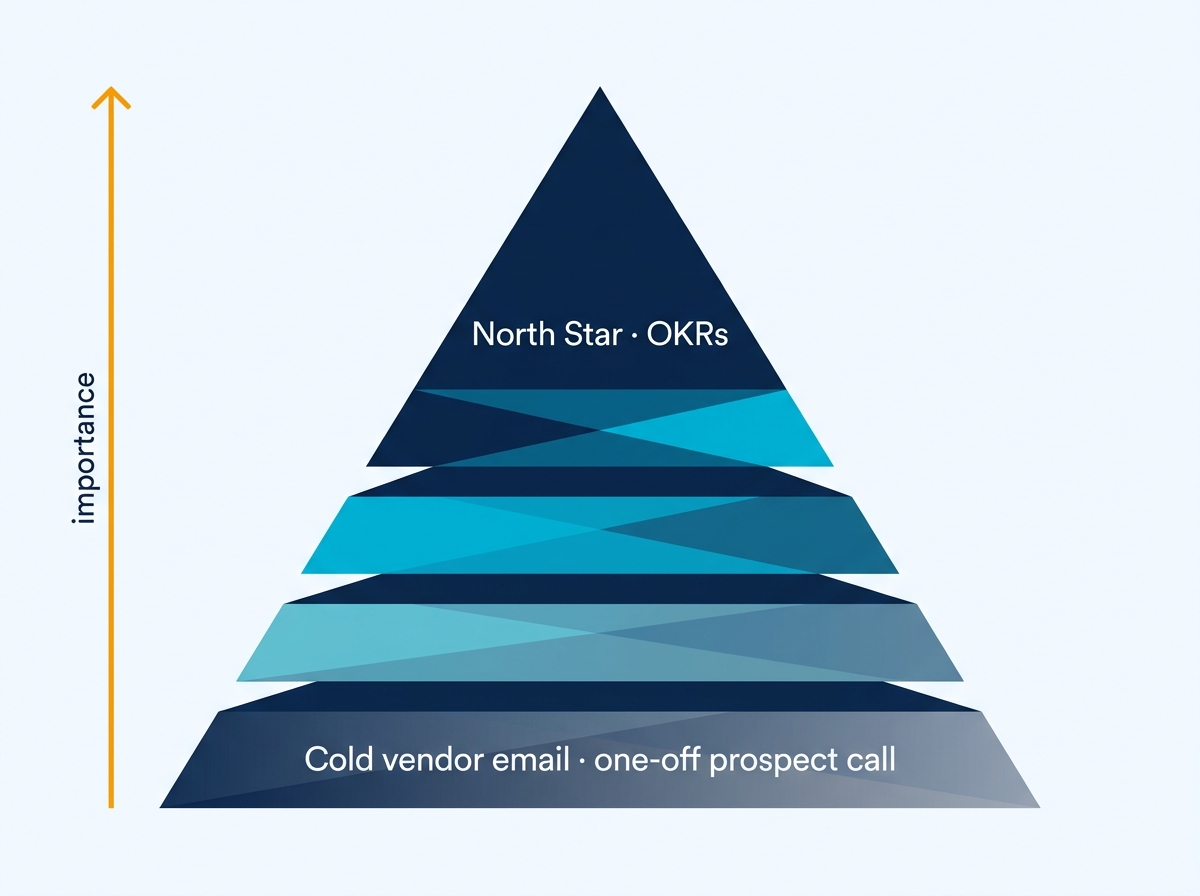
Give an AI a year of your company's information and it will hold all of it. What it can't do on its own is tell you which parts deserve to drive a decision. How does your North Star weigh against a cold vendor email? How does this quarter's goal compare to a one-off call with a prospect who may never buy?
That's the hard part, and almost nobody solves it: prioritizing information, not just tasks. A mountain of memory without priority isn't intelligence — it's noise at scale.
We didn't invent the pieces. We assembled them.
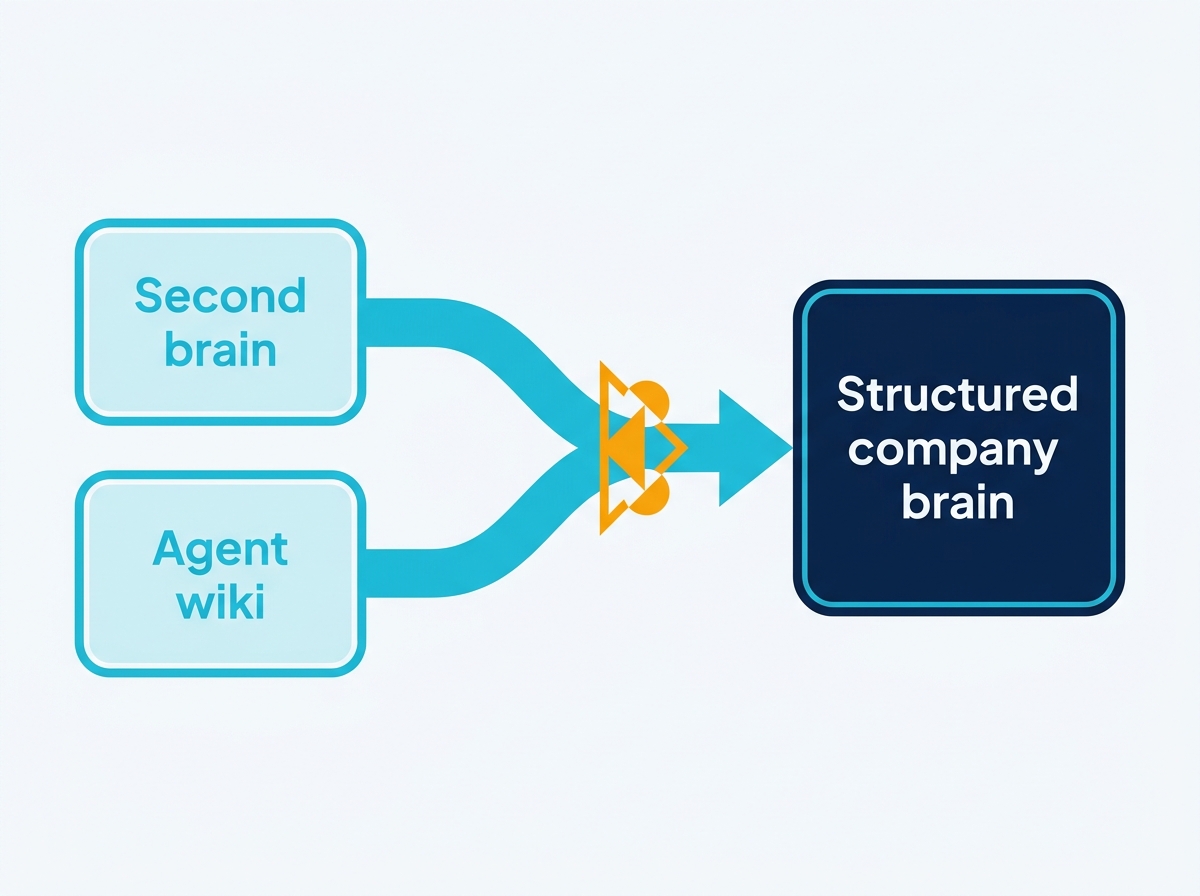
None of the building blocks here are ours, and that's the point.
The "second brain" — capture everything, link it together — was popularized by Tiago Forte. A powerful idea, but a personal second brain tends to become a beautiful mess: everything linked, nothing prioritized.
The idea of an agent that keeps its own wiki — a structured, persistent memory it reads and updates across sessions — comes from Peter Steinberger's OpenClaw and its memory-wiki, itself inspired by Andrej Karpathy's "LLM wiki" pattern. Teams using it reported something like a 90% drop in tokens spent, because an agent that reads a compiled wiki doesn't re-explore from scratch every time.
These techniques already existed. What we did was take the best of them and aim them at a company instead of a single person.
The missing piece: a loop with the right condition
Here's the part we think matters most.
A loop, on its own, is pointless. A system can run in circles forever and achieve nothing — you can only loop toward something. The whole question is what condition you loop on.
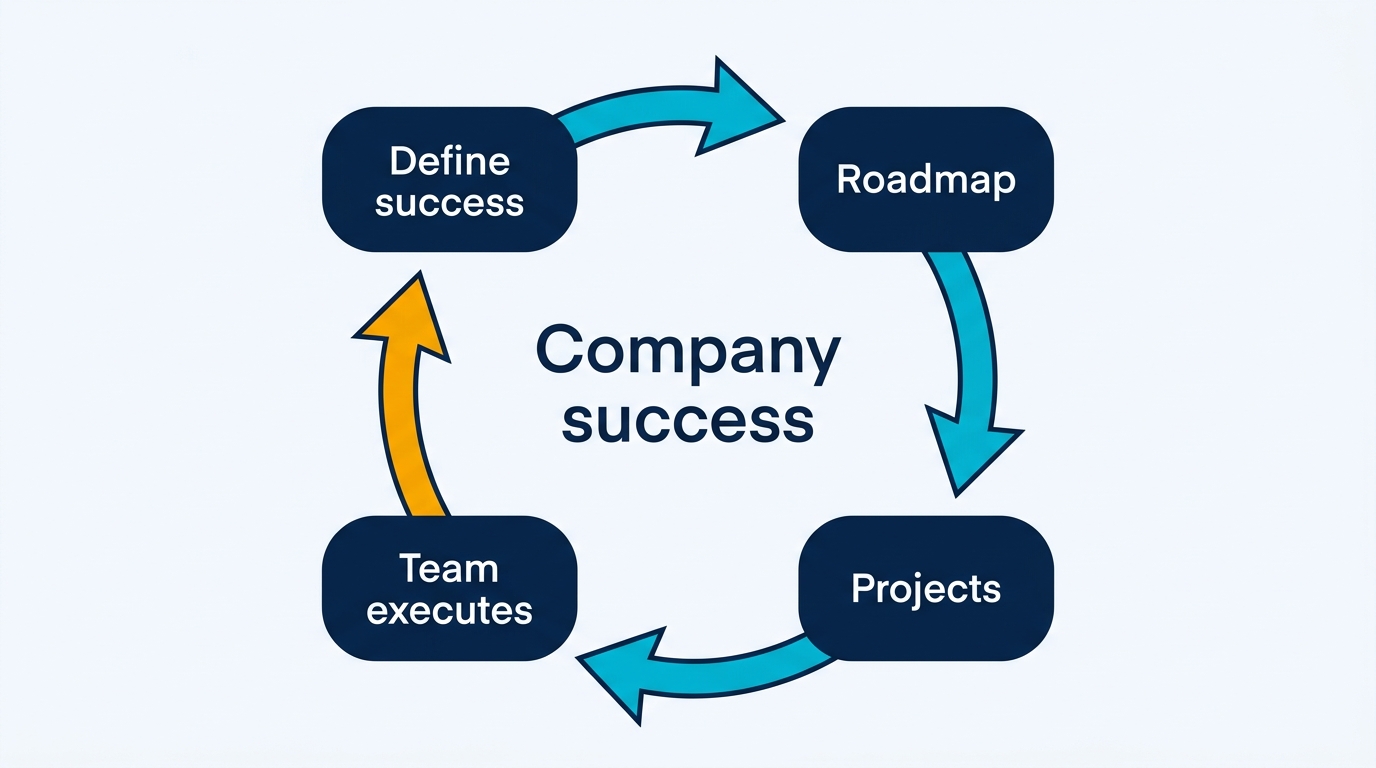
Our answer: loop on the company's success. Define what success actually means — the North Star, the goals, how you'll measure them. Lay out the roadmap and the projects that get you there. Then let the team loop on that. Once the loop's condition is the company's own goals, the team starts to self-drive: it knows what it's working toward and why, and it keeps going without someone assigning every step.
A structured, prioritized company brain
Put those together — priority, the assembled techniques, the success-loop — and you get something bigger than one person's second brain. It's a structured company brain: multiple agents, each with its own context, sharing the purpose and the priorities that matter, ranking everything they do against the company's goals.
We configure it the way real companies have always worked — a shared vision everyone knows, clear ownership of who does what, even recognizing what's been achieved — except the team is AI. Not just shared memory. A structured organization that happens to be staffed by agents.
What "self-driving" really means
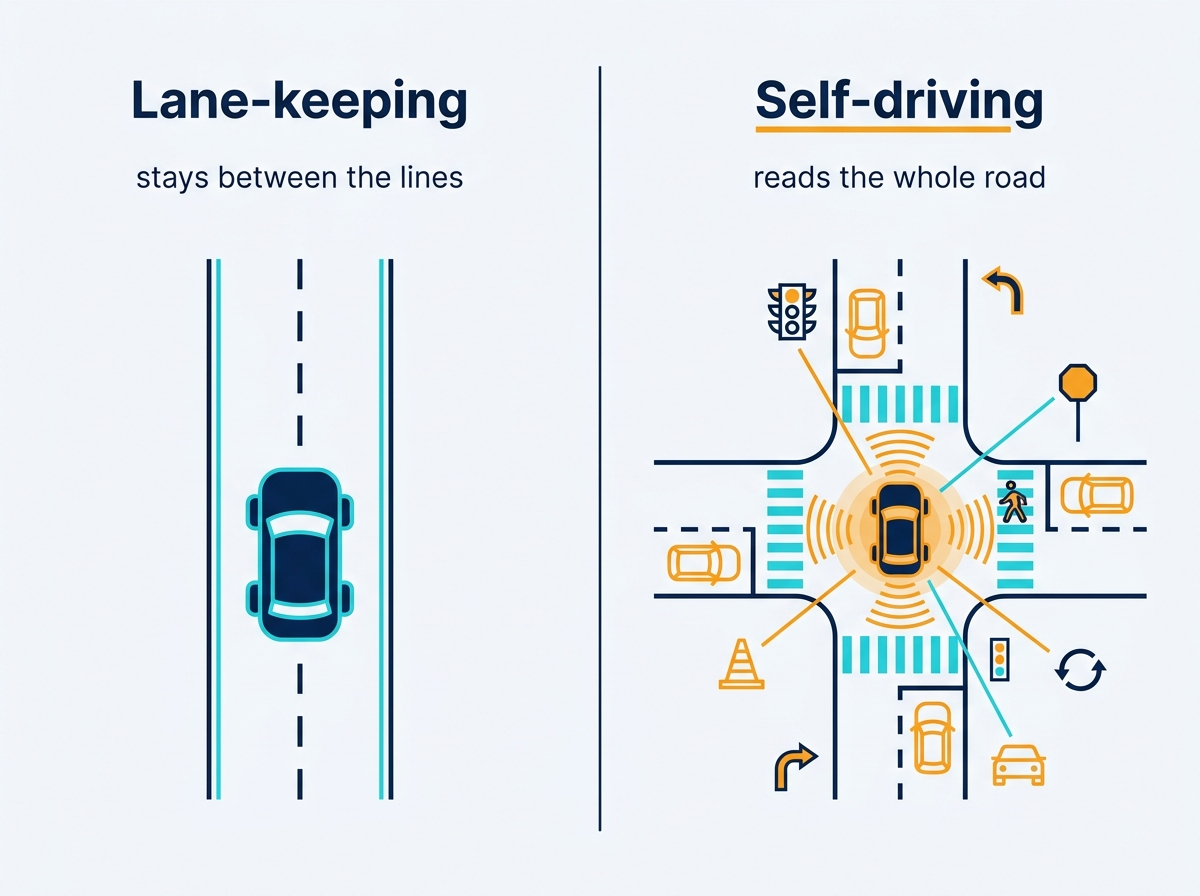
A lot of people say their business runs itself. Look closely and they've automated a few tasks and wired up some workflows — useful, but a human still steers every real decision. That's not self-driving. That's lane-keeping: the car stays between the painted lines but isn't watching the road.
A car that actually drives itself reads the whole road — it sees the pedestrian step off the curb and reacts. A self-driving company works the same way: a brain that perceives the whole business, knows what's important, and acts on it — looping on success, not running scripts until something unexpected stops them. That's what we're aiming at: a company that needs one founder's guidance, not their constant hands.
Why we're sharing this
We built this for ourselves — we call it TeamByAI — and it's already changed how our own business runs. We're documenting the journey honestly: what works, what we borrowed from others, what's still hard. And soon we'll open it up — an organized, prioritized company brain anyone can build on.
If that's something you'd want for your own work, follow along — we'll let people in as we open the doors.