Structure your agents around your workflow — not the other way around
For the past six months, my screen has looked like a small company's org chart — except every role on it is an AI agent.
That didn't happen by accident. It happened because I kept watching founders do the opposite: reshaping the way they think to fit however a particular agent tool happened to be structured. That felt backwards. AI is far more capable of adapting to how humans work than humans are of adapting to how AI is architected. So I stopped bending my workflow to the tool and started building the tool around the workflow.
Here is exactly how the structure works.
The three-level org
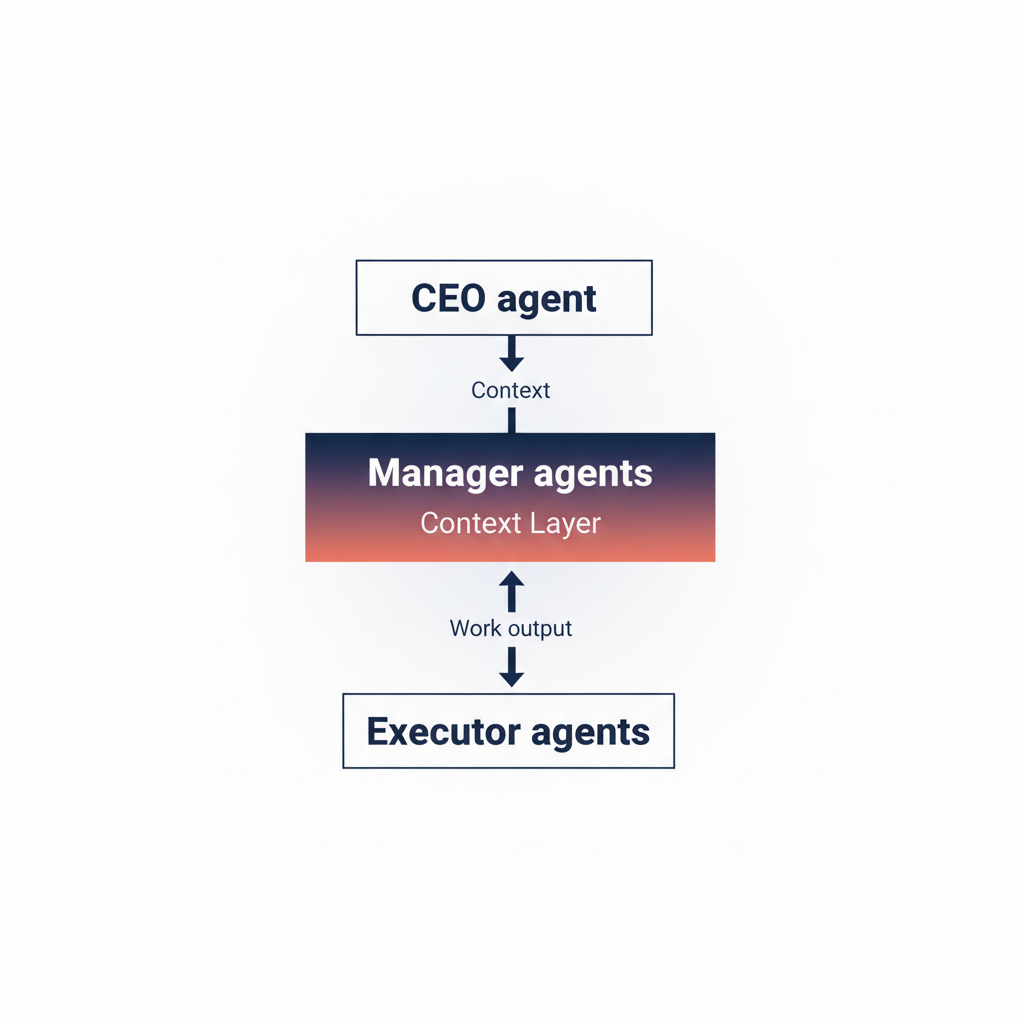
The organization has three levels: a CEO agent, manager agents, and project-executor agents.
The CEO agent holds the company's OKRs and strategic context. It can summarize what the team is doing and surface decisions that need a human call — because not every decision is pre-framed by strategy, and when one isn't, the founder needs to be in the loop.
The manager agents own the definition of done. They carry the company's full context — goals, constraints, tone, standards — and they set the acceptance criteria for every piece of work before execution begins.
The executor agents are treated like an outsourced project team. They receive context from the managers, carry out the work, and hand it back. I don't internalize execution at this level; I delegate it fully.
This matters because the tradeoff with most agent setups is that context bleeds out as you go deeper into the chain. Structuring managers as the context layer — rather than piling everything onto the executor — keeps that from happening.
The loop problem (and the fix)
Here's something nobody talks about enough: if you don't keep nudging AI agents forward, they stop. They finish a step, then pause. That's not a bug in any one tool — it's a general pattern.
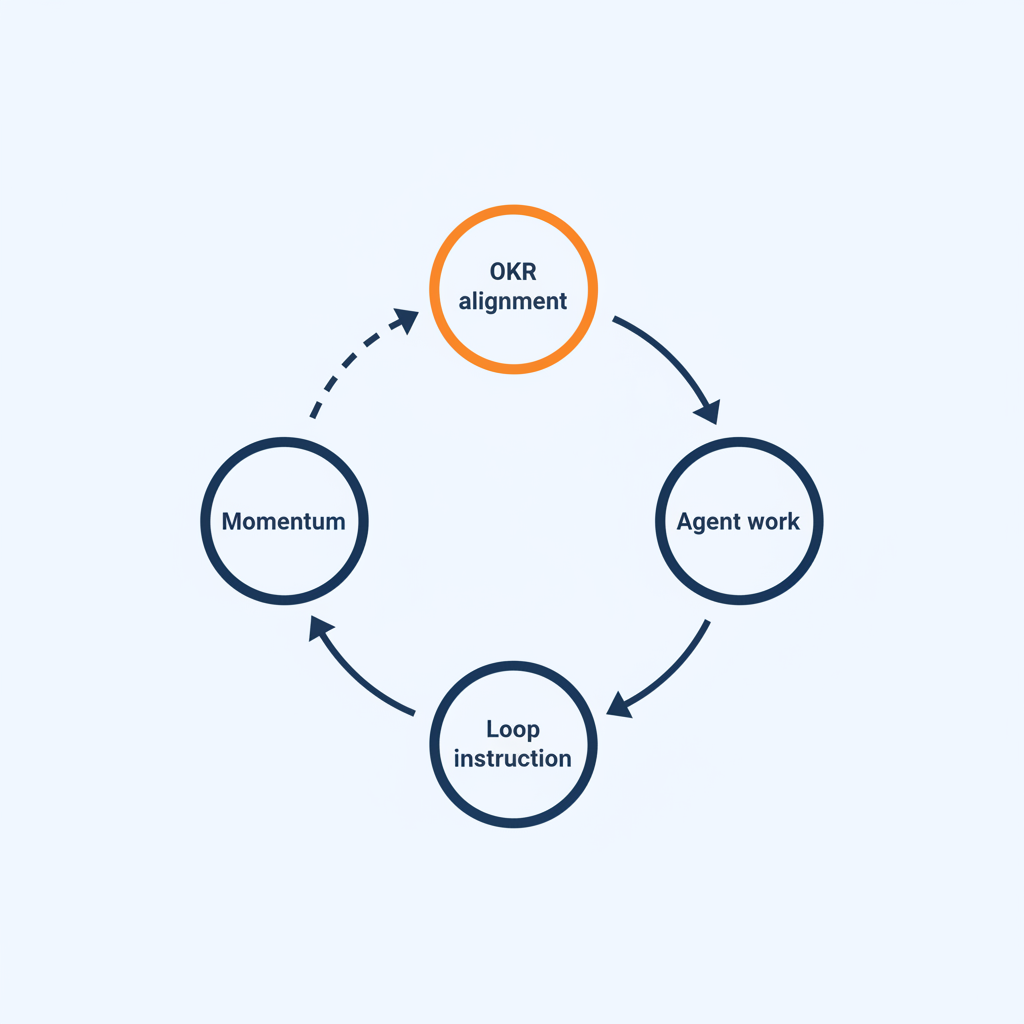
The mechanism I landed on is loops paired with explicit OKRs. When every agent knows precisely what it's responsible for, how to communicate with the others, and what success looks like, the loop instruction becomes almost trivially simple: continue your work. The OKR does the navigating. The loop does the propelling.
Without OKR alignment, loops produce drift. With it, they produce momentum.
Why structure follows workflow, not the reverse
Most agent platforms hand you a technical primitive and ask you to map your business onto it. You don't have to do it that way.
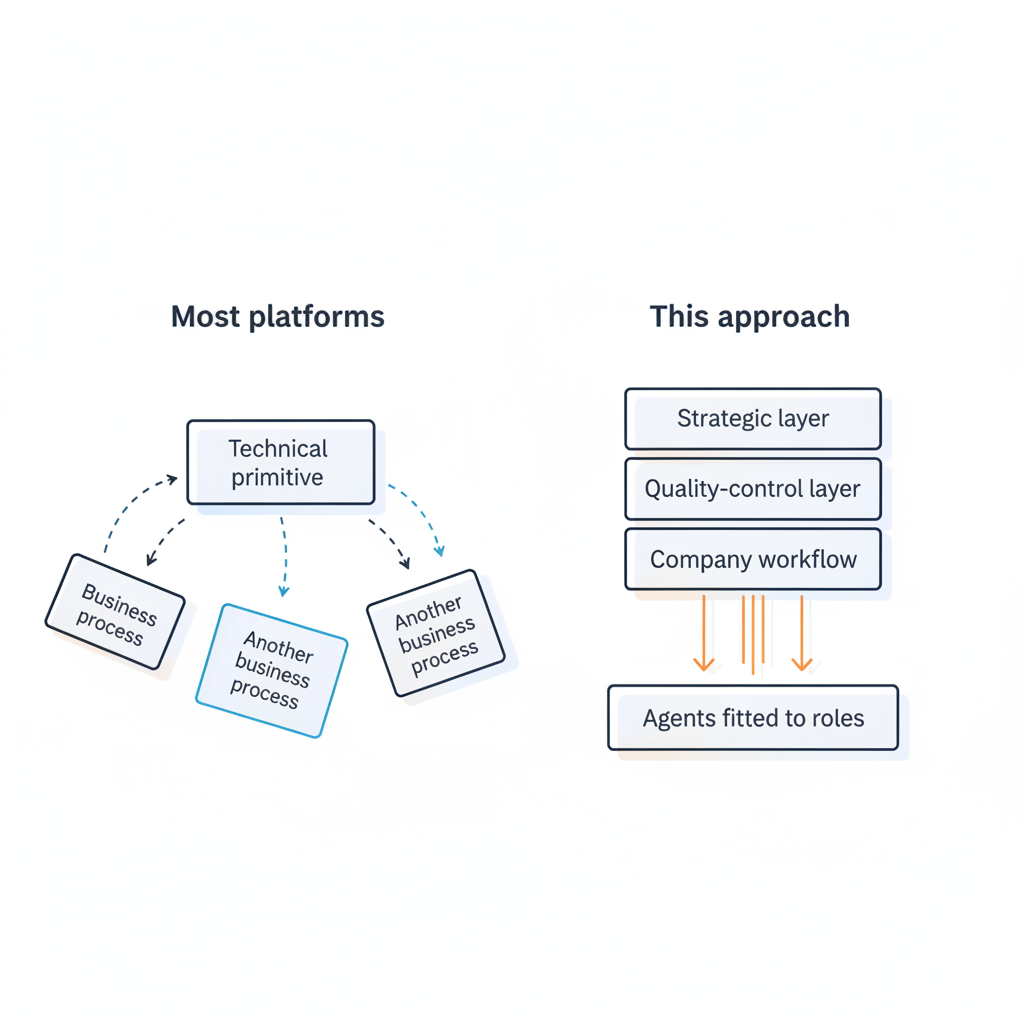
The workflow I described above was shaped entirely by how a small founder-led company actually operates: a strategic layer, a quality-control layer, and an execution layer. The agents were then fitted to those roles — not the other way around.
If you're still figuring out what that kind of setup even looks like end-to-end, What TeamByAI is explains the underlying model: agents that hold your company's context, follow a repeatable method, and work inside tools you already use.
And if you're wondering whether the economics make sense before you go further, the flat-rate model described in Agentic power on your Claude Code Max subscription is worth understanding — most metered platforms charge more the more your agents do, which creates a perverse incentive to keep them idle.
Where this is going
I'm planning to release this as an open-source project. Before it goes fully public, I'm building a list of beta users who want to get into the driver's seat of their own agent organization.
If that's you, leave a comment or reach out directly. I'll put you at the front of the line.
The playbook for what a founder's job looks like when agents handle execution is still being written — but the structure above is a concrete starting point, not a promise.