Press the reset button: the non-technical founder's playbook just changed
For about a decade, I taught non-technical founders how to build a startup — what technology you needed, what process to follow, how to hire and organize a team, how to sell, when to ship a quick prototype and when to build for the long term. More than a hundred videos, all true at the time.
In 2026, about ninety percent of that advice is wrong. Not dated — wrong. The ground shifted in under a year. Here's what replaced it, and the path I'd give a non-technical founder today.
The old scorecard is gone
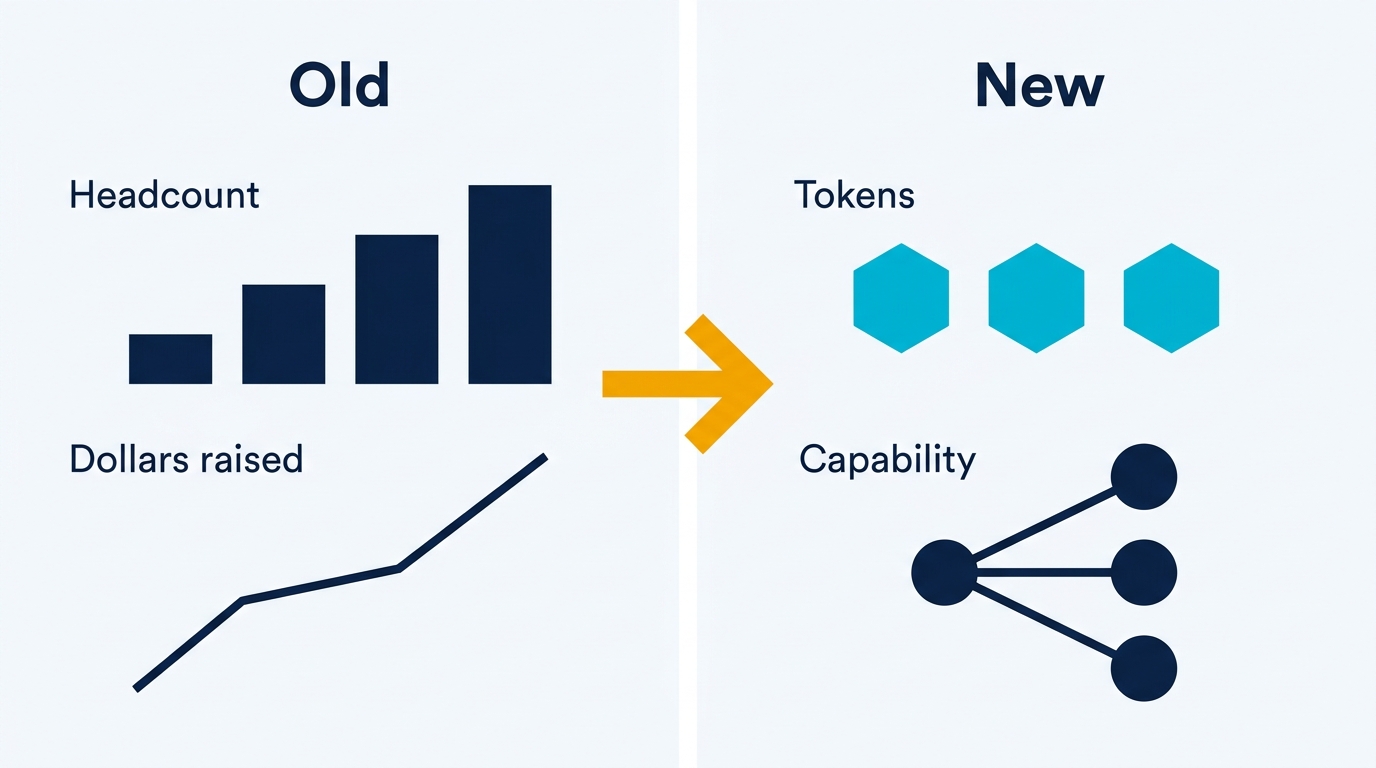
We used to measure startups in headcount and dollars raised. The whole challenge was scaling from three people to fifty in six months, racing to grab market share before anyone else could — and raising millions to do it.
That logic is breaking. You don't need to raise as much, because you don't need to hire as many people. Y Combinator now says it about as plainly as it can — tokenmaxx, don't headcountmaxx: the number that matters isn't your headcount, it's how much capability you can actually put to work. As YC's Diana Hu puts it, one person with AI tools can do what used to take a whole engineering team, and founders should "be willing to run an uncomfortably high API bill because it's replacing a far more expensive, inflated head count." Almost no investment, almost no team. What you need now is focus and a method.
Your job is now managing AI agents
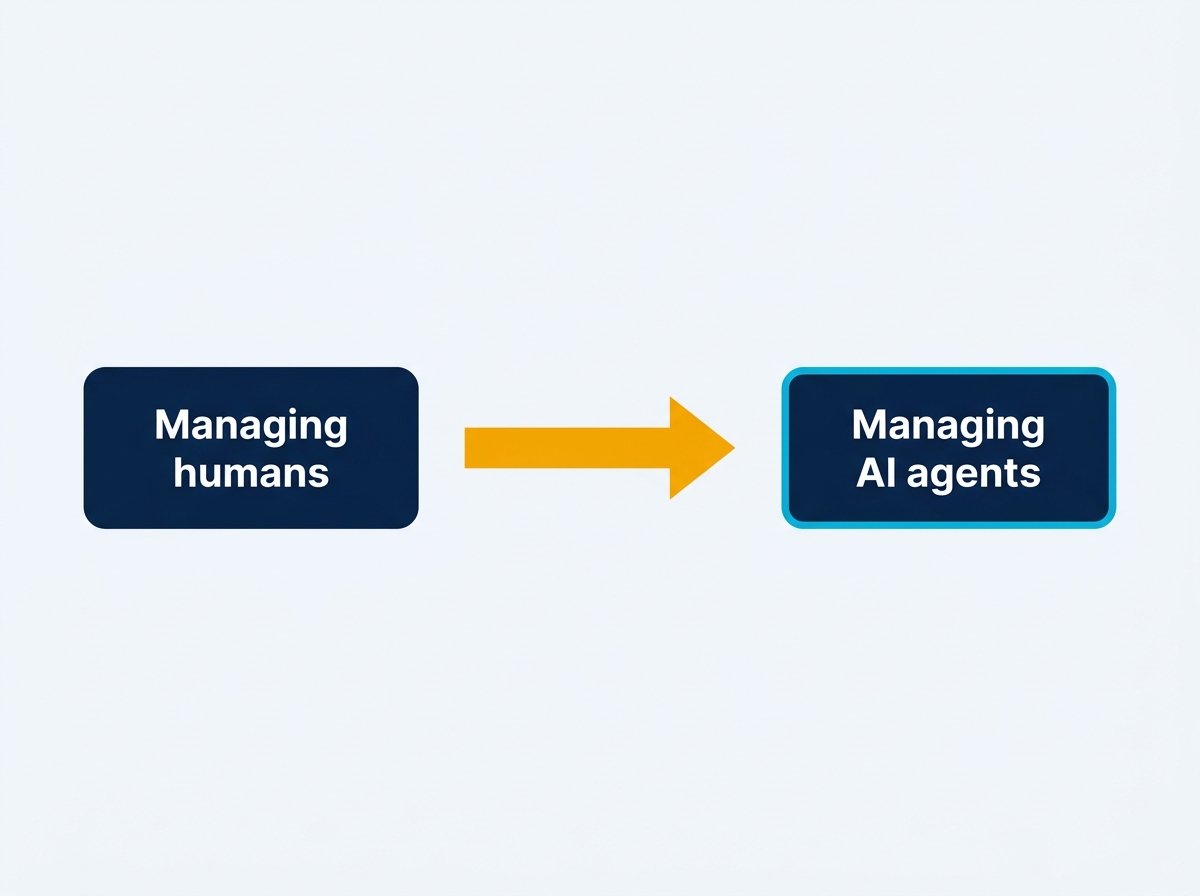
Here's the shift to internalize: you are no longer primarily a manager of humans. You are a manager of AI agents. You might keep a few people to help manage those agents — and in relationship-driven markets, humans will matter for years yet — but the human hires come last. The first skill to learn is how to organize and direct a workforce of AI agents: for your product, your support, your marketing, your partnerships, all of it.
Organize AI like a company, not a pile of prompts
Most people are trying to bolt AI onto their work with one-off prompts and clever little skills. That's backwards. We've organized human companies for centuries; we're good at it. And AI can already adapt to the way we run organizations far more easily than humans can adapt to AI.
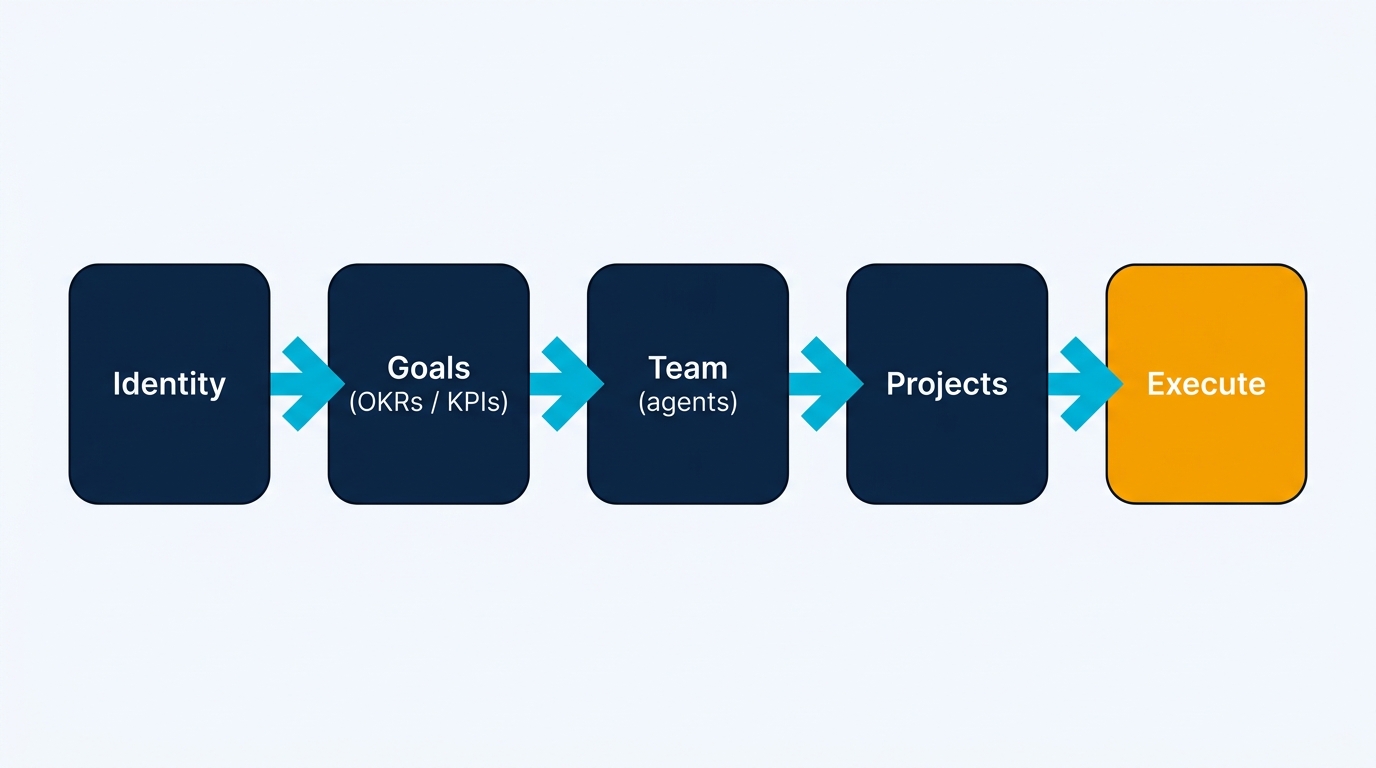
So build your AI-driven organization the way you'd build a real one:
- Identity — what the company is.
- Goals — your ambition, the North Star, the OKRs and KPIs you'll chase this month. (That objective-and-key-results discipline is the ten percent of my old playbook that still holds.)
- Team — from the goals, derive the AI agents you actually need.
- Projects — choose the work that moves you toward the North Star, and execute.
Give each agent its own memory, its own rules, and a shared company goal, and let it behave like an employee. When an agent hits a wall — "I don't know how to pull our YouTube analytics" — you don't go build the tool yourself. You tell it to build the tool, and you hand over the API key. Agents chaining context, chaining tools, and creating the tools they're missing: that's the real unlock. And that shared, growing context becomes your company's living memory — its wiki, its brain.
This is the part I've been building in the open. If you want to see what that organized AI company actually looks like in practice — the structured brain, and how to shape the agents around your work — I wrote those up separately: what a company brain that drives itself looks like, and how to structure your agents around your workflow.
It already works
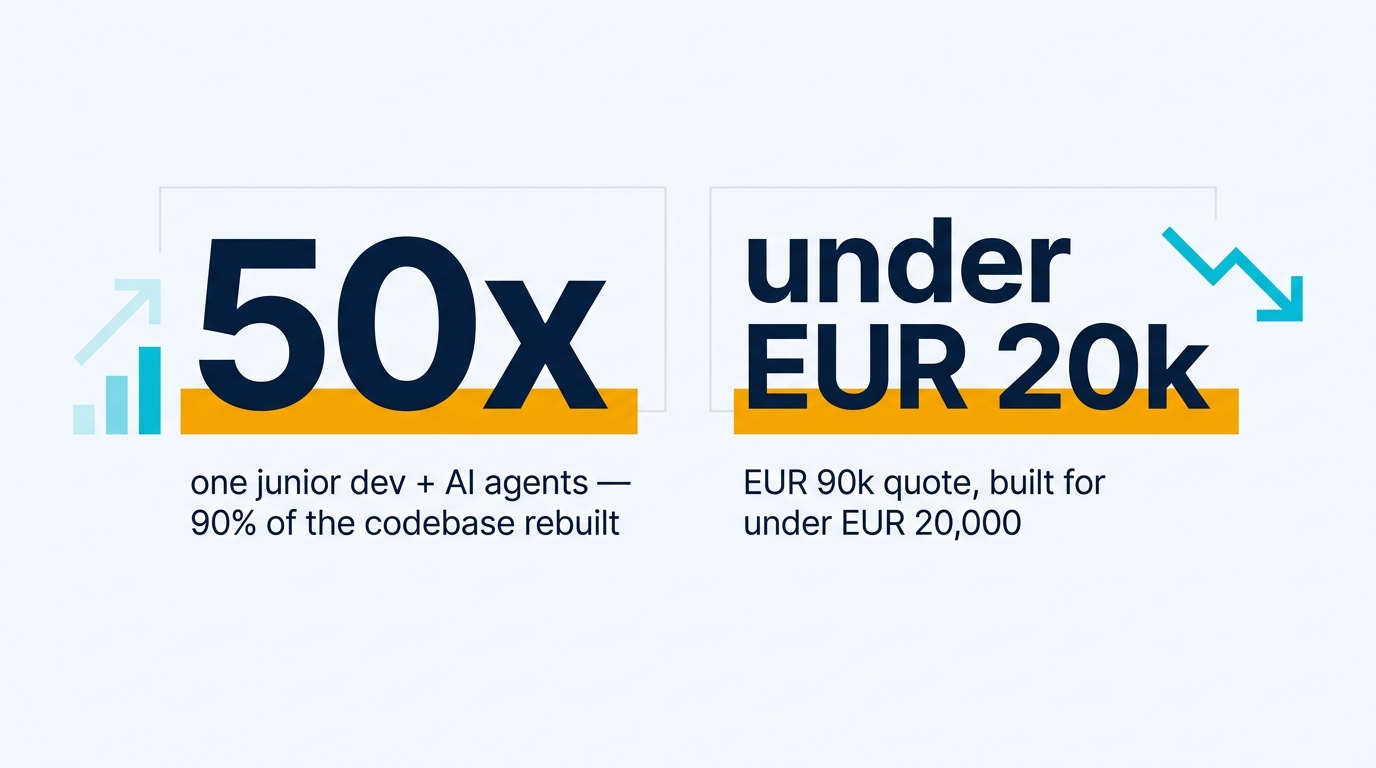
This isn't theory. A ten-person company in France had a single junior developer. In a couple of months — with AI agents and some guidance — he delivered, in their own words, fifty times what two full-time developers had managed before. Ninety percent of the codebase got rebuilt: the websites, the internal and external tools, the mobile app.
Another: two co-founders were quoted around €90,000 for a web project. A year ago I'd have called that fair. This time I told them we could cut a zero off it — and they built the whole thing, multiple apps, real clients, real providers, in under three months, for under €20,000, including my help.
This is your window
We're already in this era; it's just not well organized yet. The next step is AI that updates its own skills after every execution — we can do that at project scale today, not yet at company scale, but we're getting closer every week.
If you've been thinking about starting a company, this may be the best moment we've ever had: almost no capital, almost no team — just focus and a method. I'd even say it more bluntly: do it before it's too late. The gap between the people who can organize AI agents and everyone else is widening fast.
Press the reset button. Build the company your market deserves — a real, organized, AI-driven workforce, not a handful of prompts.